

Hurricane Season Prep: Should You Choose a Standby or Portable Generator for Your Spring Hill Home?
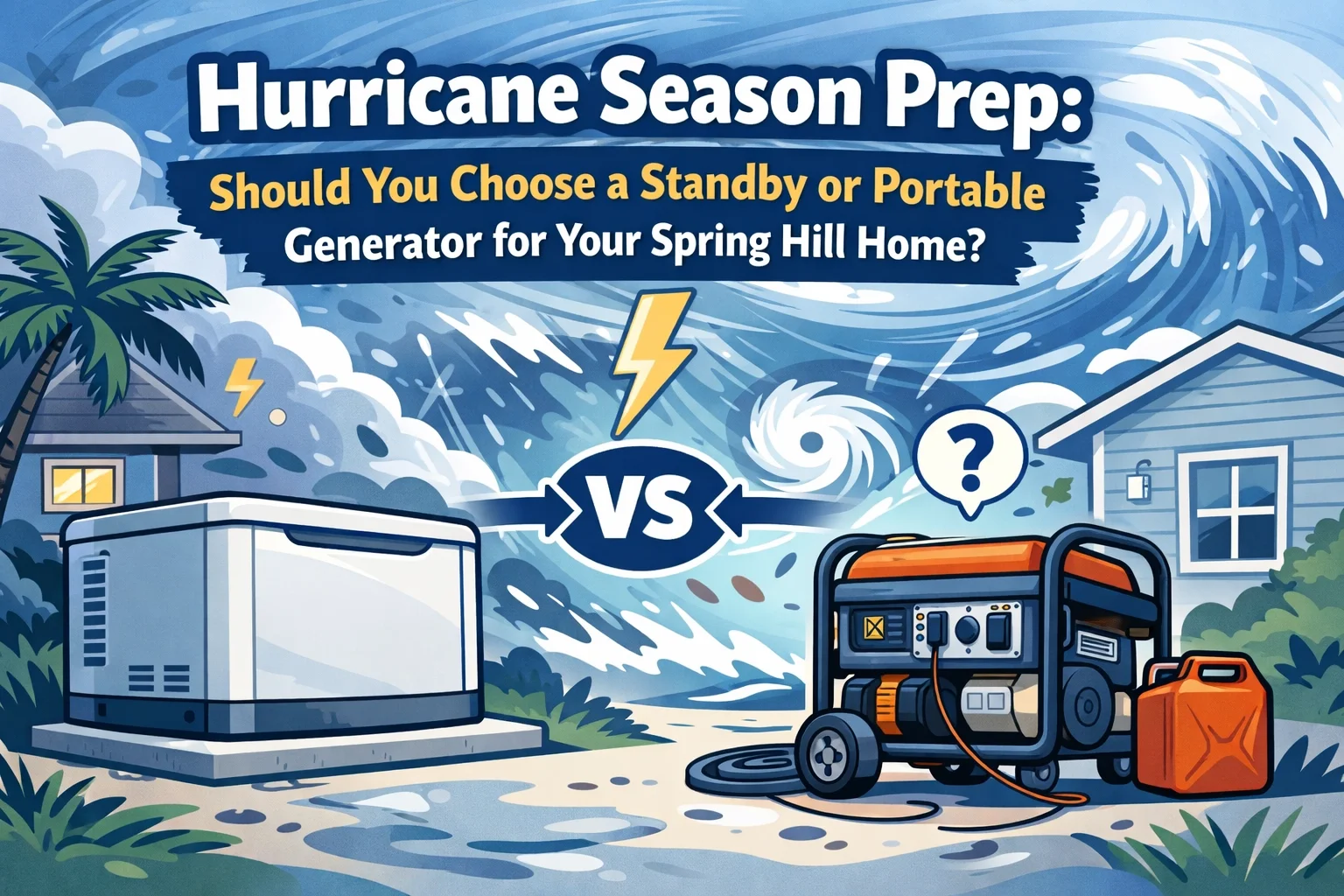
Hurricane season starts June 1st, and if you've lived in Spring Hill, Florida for more than a couple of years, you know that "being prepared" isn't just a suggestion. It's a necessity. The question isn't if a storm will knock out your power, but when, and for how long.
At PANACEA Home Services, we've worked with dozens of Spring Hill families who learned the hard way that sitting in the dark with a fridge full of spoiled food, no air conditioning, and no way to charge medical devices is more than an inconvenience. It's a safety issue. It's a stress that no family should have to endure when the solution is within reach.
So let's talk generators. Specifically, let's break down the two main options you have: portable generators with a professional transfer switch setup, and whole-home standby generators. By the end of this guide, you'll know which one makes the most sense for your home, your family, and your peace of mind.
Why This Decision Matters More Than You Think
When the lights go out during a hurricane, your home isn't just uncomfortable, it can become unsafe. In Florida's summer heat and humidity, losing power means losing climate control, which can be dangerous for young children, elderly family members, or anyone with a medical condition. Your refrigerator and freezer start warming up within hours. If you rely on a CPAP machine, oxygen concentrator, or medication that requires refrigeration, a power outage isn't just an inconvenience, it's a crisis.
We treat every home as if it were our own, and as a veteran-owned, family-operated business, we know what it means to protect the people who matter most. That perspective drives everything we do, from the way we communicate with you to the level of care we bring to every installation.

Portable Generators: Affordable Power When You Need It
Let's start with the more budget-friendly option: portable generators. These are the units you see at hardware stores, gas-powered, movable, and designed to keep a handful of essential appliances running during an outage.
How Portable Generators Work
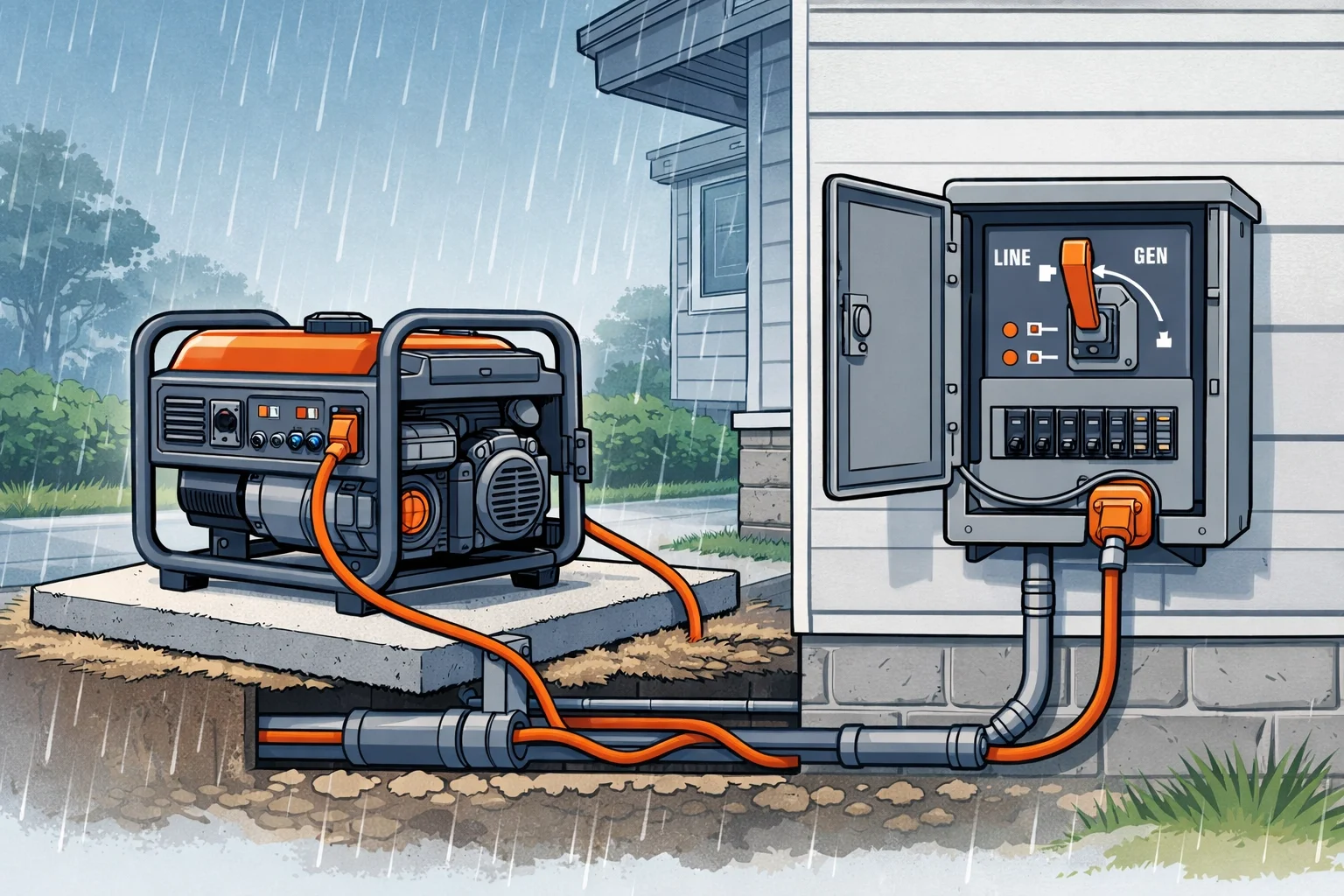
A portable generator sits outside your home (never indoors, carbon monoxide is deadly) and runs on gasoline. You manually start it when the power goes out, and it produces electricity that you can plug appliances into directly, or, and this is the key, feed into your home's electrical system through a professionally installed transfer switch.
Here's where most homeowners make a mistake: they think they can just run extension cords from the generator through a window and call it a day. That's not safe, and it's definitely not code-compliant. A manual transfer switch is a small panel installed by a licensed electrician that allows you to safely backfeed power from your generator into specific circuits in your home. This means you can power hardwired appliances like your well pump, sump pump, or HVAC system, not just things you can plug in.
The Pros of Portable Generators
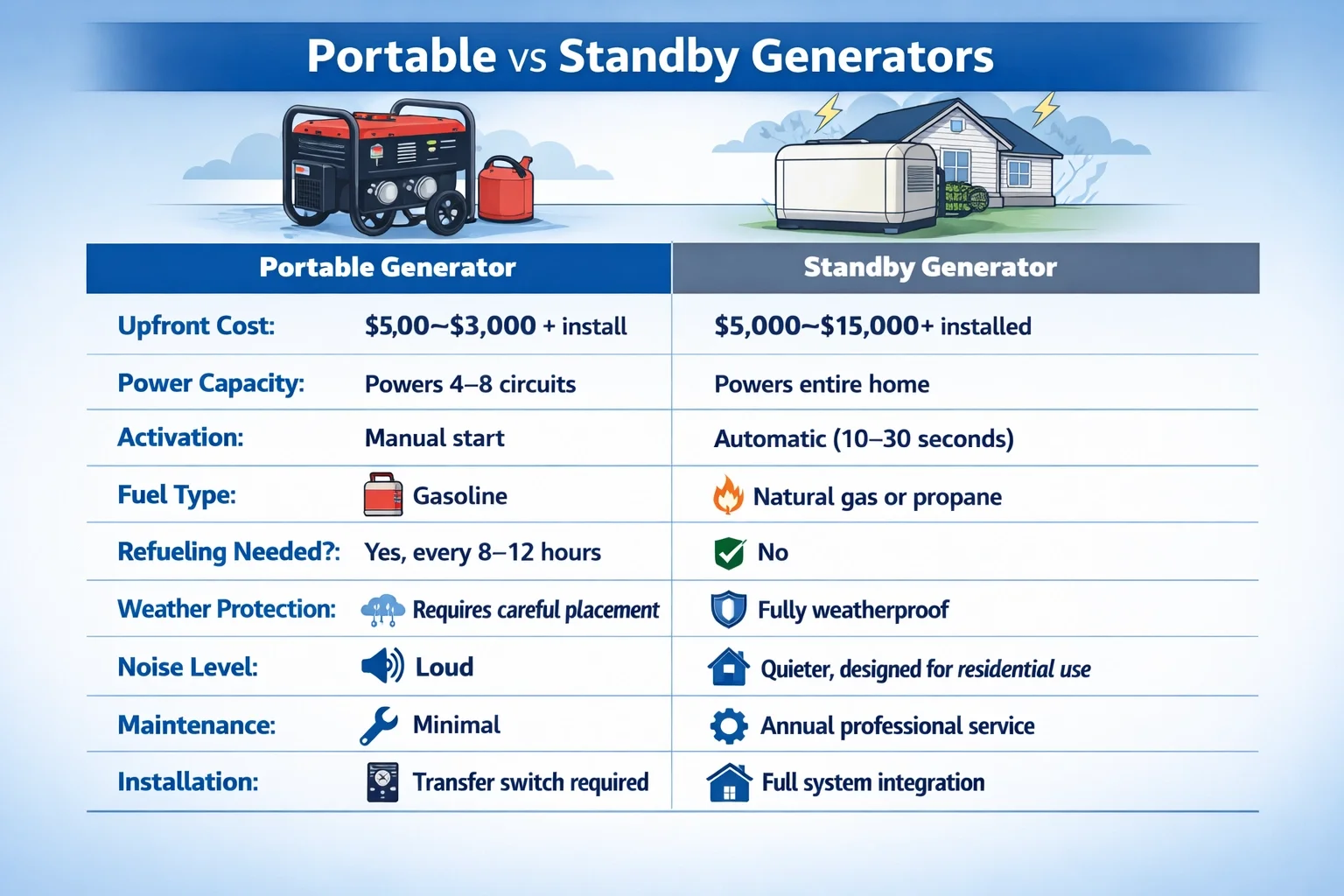
Lower upfront cost: You're looking at a few hundred to a couple thousand dollars for the generator itself, plus installation costs for the transfer switch.
Portability: You can take it with you if you move, or bring it to a job site, campsite, or tailgate.
Fuel flexibility: As long as you can get gasoline, you can run it.
The Challenges
Manual operation: You have to go outside, in the storm, to start it.
Frequent refueling: Depending on the load, you might need to refuel every 8–12 hours.
Limited capacity: Most portable units can only power a few circuits at once. You'll have to choose between running the fridge or the AC.
Noise and fumes: These units are loud, and they need to be kept at least 20 feet from windows and doors to avoid carbon monoxide poisoning.
Weather exposure: They need to be covered but never fully enclosed, which can be tricky during a hurricane.
Bottom line: Portable generators work well if you only need to power essentials for a day or two, and you're okay with hands-on management during the outage.
Whole-Home Standby Generators: Set It and Forget It
Now let's talk about the premium solution: a whole-home standby generator. If you want true peace of mind, the kind where you don't even notice the power went out until your neighbors text you, this is your answer.
How Standby Generators Work
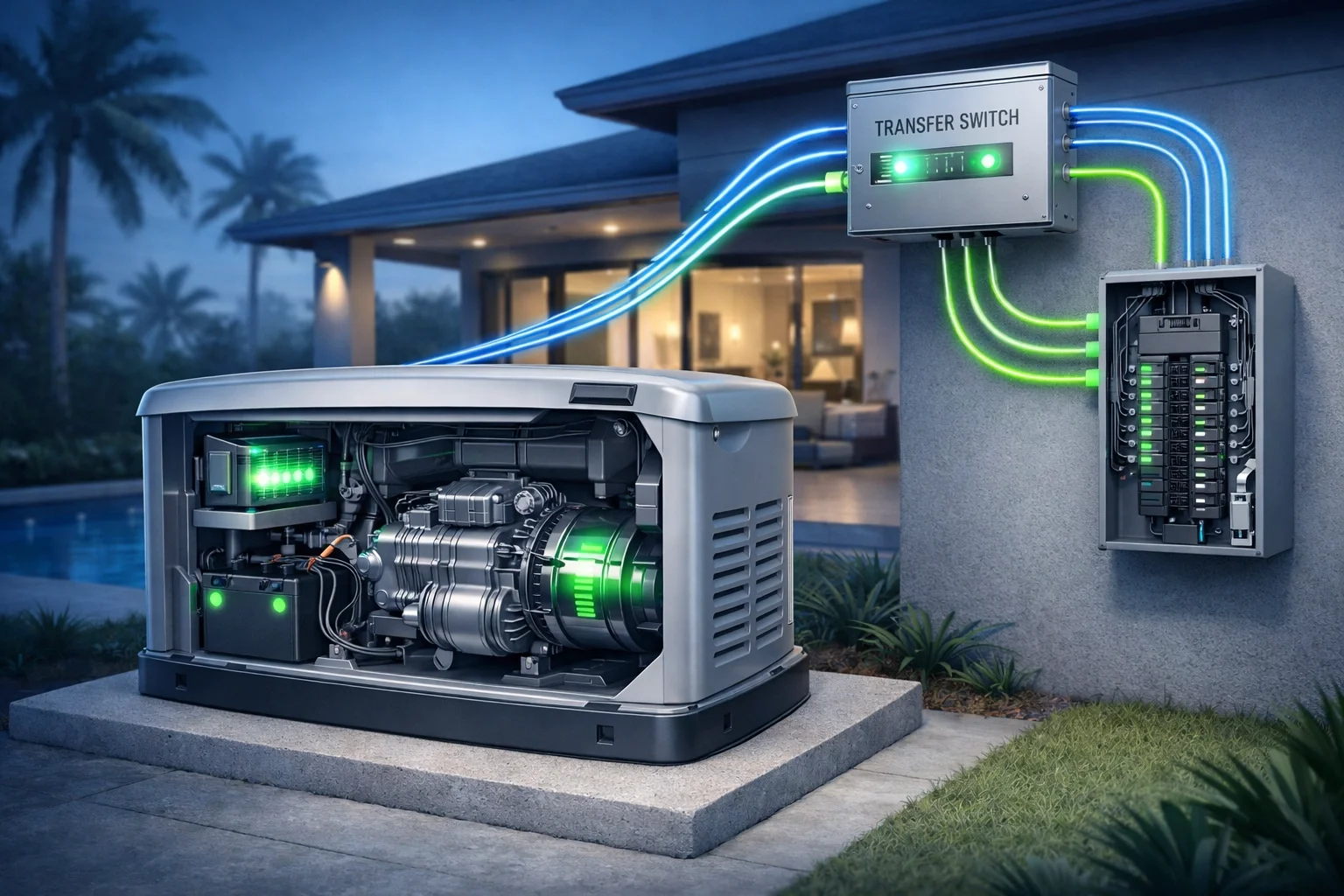
A standby generator is a permanently installed unit that sits on a concrete pad outside your home, much like your AC condenser. It's hardwired into your electrical panel and connected to your home's natural gas line or propane tank. The magic happens with an automatic transfer switch (ATS): when the generator detects a loss of utility power, it starts itself within seconds and takes over, keeping your entire home running as if nothing happened.
You don't flip a switch. You don't go outside. You don't do anything. It just works.
The Pros of Standby Generators
Automatic operation: Power is restored within 10–30 seconds of an outage.
Whole-home coverage: Every outlet, every light, every appliance stays on.
No refueling: It runs on your home's natural gas or propane supply, which means it can operate for days, or weeks, without intervention.
Weatherproof and safe: These units are designed to run in the rain, wind, and heat. No need to babysit them.
Increases home value: A professionally installed standby generator is a major selling point for buyers in Florida.
The Challenges
Higher upfront investment: You're looking at several thousand dollars for the unit and professional installation. But this is a long-term investment in your home's resilience.
Professional installation required: This isn't a DIY project. It requires permits, gas line work, electrical panel integration, and code compliance, all of which PANACEA handles from start to finish.
Annual maintenance: Standby generators need professional servicing once a year to ensure they're ready when you need them.
Bottom line: If you experience frequent or extended outages, have medical equipment in the home, or simply want uninterrupted comfort and safety, a standby generator is worth every penny.
Side-by-Side: Which One Is Right for You?
Why Professional Installation Is Non-Negotiable
Here's the part that surprises a lot of homeowners: the generator itself is only half the equation. The real work: and the real safety: comes from the installation.
Whether you choose a portable or standby system, improper installation can lead to:
Electrocution hazards from backfeeding power into the grid
Carbon monoxide poisoning from poor ventilation
Fire risks from overloaded circuits or improper wiring
Code violations that void your homeowner's insurance or prevent you from selling your home later
When you work with PANACEA Home Services for generator installation, you're getting:
Licensed, experienced electricians who understand Florida building codes and hurricane preparedness
Permit handling and inspections so everything is done right the first time
Gas line and electrical panel integration for standby systems
Transfer switch installation for portable setups
Post-install testing to make sure your system works when it matters most
We're veteran-owned and family-operated, and we bring that same commitment to precision, accountability, and care to every job site. We don't cut corners, and we don't walk away until you have total confidence in your system.
Making Your Decision
So, which generator is right for your Spring Hill home?
Choose a portable generator with a professional transfer switch if:
You're on a tighter budget and need basic storm coverage
You only lose power for a day or two at a time
You're comfortable with hands-on operation and refueling
You want flexibility to take the unit with you if you move
Choose a whole-home standby generator if:
You want automatic, worry-free backup power
You have medical equipment or family members who need consistent climate control
You experience frequent or extended outages (common in Spring Hill during storm season)
You're looking for a long-term investment that increases your home's value and resilience
Not sure which one fits your situation? We're here to help. At PANACEA, we don't just sell generators: we help you make the right choice for your family's safety and peace of mind. We'll walk your property, assess your electrical panel, discuss your needs, and give you an honest recommendation.
Get Ready Before the Storm Hits
Hurricane season waits for no one. By the time the storm is on the radar, it's too late to schedule an installation: every contractor in the state is booked solid, and supply chains get stretched thin.
The time to act is now. Whether you choose a portable or standby system, getting it installed and tested before June means you'll have one less thing to worry about when the forecast turns serious.
We're proud to serve the Spring Hill community with the same integrity, transparency, and dedication we bring to our own families. Let us help you protect yours.
Ready to talk generators? Schedule a consultation with our team, or give us a call. We'll walk you through your options, answer your questions, and get you set up with a system that's ready when you need it most.
Because when the lights go out, your family deserves to stay safe, comfortable, and connected. That's a promise we stand behind.
